

Sun-drenched vineyards in Tuscany, vespas weaving through the streets of Rome, and slow afternoons over espresso in a quiet piazza. For many Americans, moving to Italy from the USA represents the ultimate version of the good life. But packing a suitcase and booking a one-way ticket only tells half the story, since visa rules, centuries-old buildings, and a bureaucracy that moves at its own pace all shape how the transition actually unfolds.
Romance Versus Reality: What “La Dolce Vita” Really Means
Italy is a beautiful country, and it makes no apologies for how it operates. Adjusting to that rhythm is usually the first real challenge for an American expat.
The One-Euro Home Myth
You’ve probably seen the viral headlines about tiny Italian villages selling abandoned stone houses for one euro. It sounds like the perfect romantic project: buy a crumbling cottage in Sicily and turn it into a dream vacation home.
In practice, those one-euro homes come with mandatory renovations on a strict timeline, usually three years. Buyers need to hire a local geometra (something between an architect and a surveyor), work within strict historic preservation rules, and deal with the kind of supply delays that are common in smaller towns. A renovation that might take three months in Texas can easily stretch into three years in rural Italy.
Learning to Move at an Italian Pace
In the United States, efficiency tends to come first. In Italy, the guiding principle is closer to il dolce far niente, the art of doing nothing at all.
That slow pace is part of the appeal, but it can be frustrating the first time you’re waiting on a Wi-Fi technician, opening a bank account, or tracking a delayed package. Government offices often close early in the afternoon, and the entire country slows down in August during Ferragosto, a nationwide holiday stretch. Settling in well usually means trading American urgency for Italian patience.
Visa Options for Americans Relocating to Italy from America
Tourists can stay in Italy for up to 90 days, but a longer stay requires the right paperwork. Italy’s immigration rules have shifted in recent years, and as of 2026 there are a few solid paths for Americans who want to stay long-term.
The Elective Residence Visa for Retirees
This is the most common route to the Elective Residence Visa in Italy, built for retirees or anyone with steady passive income. It suits people who can support themselves financially without working inside the country.
The tradeoff is real: you cannot work on this visa, not even remotely for a US employer. Applicants need to show a high, consistent passive income from sources like pensions, rental property, or investments, along with proof of housing in Italy before the application is even submitted.
The Italian Digital Nomad Visa 2026
Fully active and increasingly popular, the Italian digital nomad visa has changed the equation for remote employees and freelancers. It’s designed for highly skilled remote workers employed by companies outside Italy.
Applicants need to show a minimum annual income, comprehensive health insurance, and a clean criminal record. For younger Americans who want to experience Italy while keeping a US salary, it’s one of the more practical options available.
Dual Citizenship Through Jure Sanguinis
Americans with Italian ancestry may qualify for citizenship by descent, known as jure sanguinis. This path leads to a full EU passport, with the right to live and work anywhere in Europe.
The catch is time. Gathering birth, marriage, and death certificates for past generations, then waiting for a consulate appointment, can take years from start to finish.



Best Italian Regions for Expats: Choosing Where to Live
Italy looks small on a map next to the United States, but the differences between its regions, culturally and economically, are significant. Where you settle will shape almost everything about your experience.
The Industrious North: Milan, Turin, Bologna
This is Italy’s fast-paced, well-organized, economically driven side, with Milan serving as the country’s financial and fashion capital.
- Stronger public transport and job market
- Efficient healthcare system
- Easier integration for corporate expats
- Higher cost of living, with colder, greyer winters
- Feels less traditionally Italian and closer to broader Europe
The Historic Center: Rome, Florence, Tuscany
This is the Italy most Americans picture: a living museum shaped by centuries of art and history.
- Unmatched art, culture, and expat communities
- Central access to the rest of the country by high-speed train
- Overtourism during peak season
- High rent inside the historic centers
- Bureaucracy in Rome is famously slow
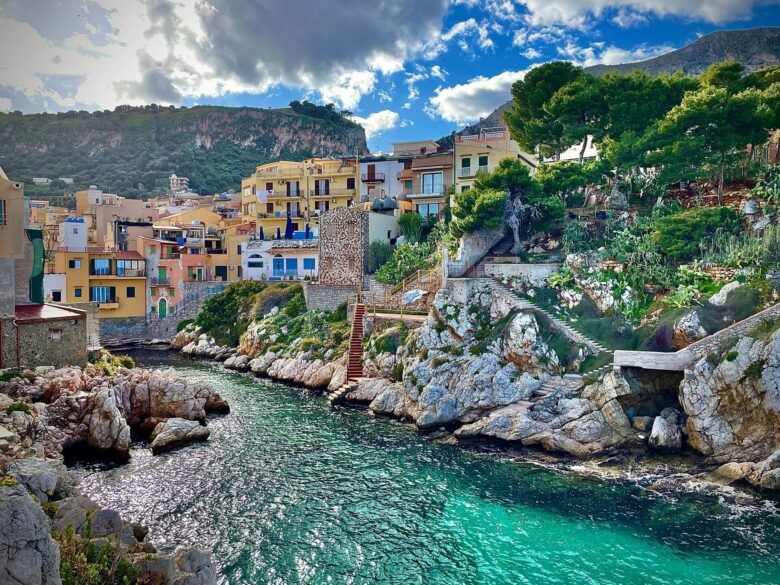
The Relaxed South: Naples, Puglia, Sicily
Sun-drenched, a little chaotic, and deeply traditional, the south rewards patience with warmth.
- Low cost of living and arguably the best food in the country
- Stunning coastlines and welcoming locals
- Weaker infrastructure and job market
- Slower administrative processes
Cost of Living in Italy for US Expats
For most Americans, the cost of living in Italy stretches further, though spending habits shift in a few key ways.
- Housing: A two-bedroom apartment in a mid-sized city typically runs 800 to 1,200 euros a month. In Milan or Rome, expect close to double.
- Groceries and food: Fresh produce from local markets is affordable, a decent bottle of regional wine runs 5 to 10 euros, and a morning cappuccino is usually around 1.50 euros.
- Utilities: This tends to surprise Americans. Gas and electricity cost more than in the US, air conditioning is used sparingly, and heating is used conservatively in winter.
- Healthcare: Legal residents can register with the Servizio Sanitario Nazionale (SSN). Depending on tax status, this means excellent public healthcare for a small annual fee or at no cost at all.
Jobs and the Italian Economy
Anyone not retiring or working remotely for a US employer will find the local job market challenging. Italian salaries run well below US levels, with a solid mid-level corporate role typically paying between 30,000 and 40,000 euros a year. Hiring also tends to move slowly, and it’s common to start with a fixed-term contract before being offered something permanent. Non-EU citizens usually need a local employer willing to sponsor a work visa, and Italy limits the number of these permits issued each year through a quota system known as the decreto flussi.
Language matters just as much as salary. Outside multinational tech and finance firms based in Milan, fluent Italian is generally required to enter the local workforce. Many Americans work around this by registering as freelancers under a partita IVA, Italy’s self-employed tax status, which makes it possible to consult, teach English, or run a small business without needing an employer to sponsor anything.

What Daily Life Actually Looks Like After You Move
Relocating this far means updating daily habits, not just an address. Small routines that felt automatic back home, like grabbing coffee on the way to work or running errands after five, get replaced with a slower, more social rhythm that usually takes a few months to feel natural.
- Meals are an event. Lunch isn’t eaten at a desk, and dinner rarely starts before 8 or 9 in the evening, especially in the south.
- You’ll drive less. Outside rural areas, walking and public transit replace most car trips.
- Less space, more quality. Closets, refrigerators, and cars all shrink, but food, leisure time, and social life tend to improve.
- Bureaucracy becomes routine. Small tasks like renewing a residence permit or registering with a local doctor often take more than one visit to the same office, so patience becomes part of daily life.
The Real Logistical Challenges: ZTL Zones and Historic Streets
Here’s where the actual move gets complicated. Once a shipping container reaches the port of Genoa, those goods still need to travel to an apartment somewhere like historic Florence, and that last stretch is where things get difficult for movers who don’t know the terrain.
Almost every Italian city has a ZTL (Zona a Traffico Limitato), a restricted traffic zone meant to protect historic centers from congestion. Unauthorized vehicles entering these zones face steep, automatic fines, and standard 40-foot moving trucks are banned outright.
Architecture adds another layer. Renaissance-era buildings rarely have spacious service elevators, and hallways, staircases, and doorways were built for a different century. Add narrow, pedestrian-heavy cobblestone streets where a large truck simply cannot park, and it’s easy to see how belongings end up stuck outside city limits with movers scrambling to rent a local van at the last minute.

How Schmidt Movers Simplifies International Moving Services to Italy
At Schmidt Movers, international relocations to Italy are what we handle every day, and we know how to work through this kind of logistical maze. Rather than shipping your belongings overseas and stepping back, we manage the process from the port to your front door.
A Shuttle Strategy Built for Historic Centers
Since large shipping containers can’t enter Italian historic centers, we rely on a coordinated network of smaller shuttle vehicles, or furgoni. Your container is unloaded at a local warehouse, and your goods are transferred onto shuttles built to navigate tight alleyways and steep hills with ease.
Permits and Paperwork Handled for You
We take care of the bureaucratic side, including ZTL permits from the local Comune and public land occupation permits (Occupazione Suolo Pubblico) when street space is needed to operate a moving lift up to your balcony.
Packing Built for Shipping Household Goods to Italy
When shipping household goods to Italy, your furniture spends weeks at sea, exposed to ocean movement and shifting climates, so packing has to hold up.
- Export wrapping using heavy-duty, international-grade materials
- Custom crating for antiques, artwork, and delicate electronics
- White-glove delivery, meaning your items are carried inside, unwrapped, placed where you want them, with all packing debris removed

Car Shipping to Italy: Is It Worth Bringing Your Vehicle?
One question we hear often: should you bring your car along? As a company that handles car shipping to Italy, including customs clearance and port handling, we like to give a straight answer.
Cars owned for at least six months can typically be imported duty-free, though registering a US vehicle in Italy requires modifications to meet EU emissions and safety standards, right down to the color of your turn signals. It’s also worth knowing that Italian roads were not built with a Ford F-150 in mind. Parking spaces are tight, and village streets are often centuries old.
If you own a classic, a luxury vehicle, or a compact car you genuinely love, shipping it by Roll-On/Roll-Off or dedicated container is a reasonable choice. If you drive a large, standard American vehicle, selling it before the move and buying something European-spec on arrival is usually the more practical route.
Your Pre-Departure Checklist Before Leaving the USA
A few things are worth handling before the romance of Italy takes over completely.
- Get your Codice Fiscale. This is Italy’s version of a Social Security number, required for renting an apartment, opening a bank account, and even buying a phone plan. It can be requested through your local Italian consulate before you leave the US.
- Prepare for the Dogana (customs). Proving that you’re transferring residency helps you avoid high import taxes on used household goods. Schmidt Movers helps prepare the Dichiarazione Consolare (Consular Declaration) so customs clearance goes smoothly.
- Downsize before you pack. European homes rarely match American square footage, so oversized sectionals and king-sized beds are usually better left behind.
Ready to Begin Your Italian Adventure?
Moving to Italy from the USA is a major decision, and one that comes with real beauty, excellent food, and a level of cultural richness that’s hard to overstate. The bureaucracy is thick and the logistics of moving into centuries-old cities are genuinely complicated, which is exactly why having the right partner matters.
Schmidt Movers brings American efficiency to European logistics, with the on-the-ground knowledge to handle Italy’s streets, permits, and unique challenges. Reach out for a personalized quote, and get ready to start living la dolce vita.
FAQ
How long does it take to ship household goods to Italy?
Ocean freight generally takes 4 to 6 weeks from the East Coast and 6 to 8 weeks from the West Coast, plus another week or two for customs clearance and final delivery by shuttle.
Do I need to speak Italian to get by?
English works in major cities like Rome or Milan, but dealing with landlords, administration, and local tradespeople requires Italian. Learning the language makes a real difference in day-to-day life.
How much does an international move to Italy cost?
Pricing depends on the volume of your belongings and your starting point in the US, since a full 20-foot container and a partial load are priced very differently. Contact Schmidt Movers for a quote based on your specific move.