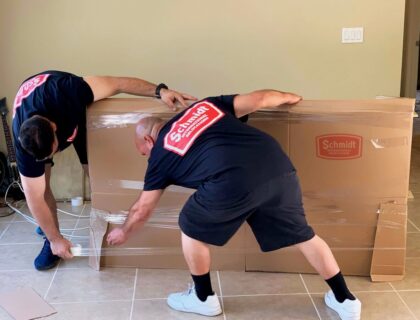

Moving across town is stressful. Moving across state lines is harder. But moving an aging parent or spouse who uses a wheelchair? That is a completely different undertaking that asks you to be a project manager, a medical coordinator, a counselor, and a caregiver all at once.
If you’re reading this, chances are you’re already feeling the weight of that responsibility. Take a breath. You’re in the right place, and you don’t have to figure it out alone. At Schmidt Movers, we’ve helped countless families guide their loved ones into safer, more accessible homes – and we’ve put together this guide to walk you through every step of the way.
Why a Wheelchair-Friendly Move Requires a Completely Different Game Plan
When mobility is limited, the move stops being about furniture and starts being about physical safety, medical stability, and emotional well-being. A small oversight – a half-inch threshold, a missing grab bar, a doorway that’s just slightly too narrow – can turn into a serious accident on day one.
The good news? With modern accessible design, smart home technology, and the right moving partner, your loved one’s new place can feel like a true sanctuary from the moment they roll through the front door. Below is everything you need to make that happen.
Understanding “Transfer Trauma”: The Emotional Side No One Talks About
Before we get into ramps and grab bars, let’s talk about something that often gets overlooked, which is the emotional cost of relocation for an elderly person.
There’s a recognized condition called Relocation Stress Syndrome, sometimes called Transfer Trauma. When seniors lose their familiar surroundings, they lose more than a house. They lose their spatial memory, which serves as the unconscious map their brain has built over years or decades.
In their old home, they knew:
- Exactly how many pushes it took to get from bed to bathroom
- Which floorboard creaked
- How to angle their chair to reach a favorite mug
- Where the light switches were without thinking
Strip that away, and you can trigger anxiety, sleep disturbances, confusion, and depression.
How to Soften the Blow
Communication is everything here. Bring your loved one into the planning. Show them photos of the new place. Talk through the modifications you’re making for their comfort. When you set up the new bedroom, mirror the old layout as closely as you can – same side for the lamp, same direction the bed faces, the same blanket folded at the foot.
Validate the grief of leaving. Then gently empower them to embrace the new space. That balance is the best prevention against transfer trauma there is.
Build a Medical Safety Net Before the Boxes Arrive
A move can disrupt routines that have taken years to stabilize. When chronic conditions are involved, those routines aren’t optional — they’re life-sustaining. Lock these pieces down weeks before the truck shows up.
Line Up New Doctors Early
Don’t wait until you’ve arrived to start searching for a primary care physician. Transfer medical records ahead of time and book initial appointments with new doctors and specialists before move-in day.
Stock Up on Prescriptions
Aim for a 60-to-90-day supply of every important medication. The last thing you want is to be on hold with a new pharmacy over an insurance authorization while your loved one runs short on heart medication or insulin.
Secure Local DME Suppliers
If your loved one depends on durable medical equipment – oxygen concentrators, feeding tubes, customized power wheelchair parts – find local suppliers in the new state ahead of time. Continuity of care matters.
Get Telehealth Ready From Day One
Before move-in day, make sure high-speed internet is active and the virtual care portal is up and running. Place the setup somewhere comfortable and easy to access – not buried in a back office your loved one can’t easily reach.
The Pre-Move Accessibility Checklist: Room by Room
Exterior and Entryways
- Install a permanent ramp. Temporary aluminum ramps are fine for moving day, but daily living calls for something sturdier. The ADA standard is a 1:12 slope, meaning one inch of rise for every twelve inches of run. Add solid, dual-sided handrails.
- Eliminate every threshold. Even a half-inch lip can catch a small front caster and tip a wheelchair forward. Aim for zero-step entries.
- Upgrade to smart access. Smart locks and a video doorbell let your loved one see who’s at the door and let visitors in from a phone or voice command without requiring any rushing to the entryway.
Hallways and Doors
- Widen the doorways. Standard residential doors run 28 to 30 inches, which is far too tight for comfortable wheelchair use and a guaranteed source of scraped knuckles. Aim for 32 inches at minimum, 36 inches for true comfort.
- Try offset hinges. If full widening isn’t in the budget yet, swing-clear hinges push the door completely out of the frame and add up to two extra inches of clearance for a small fraction of the cost.
- Swap round knobs for lever handles. Twisting a round knob is painful for arthritic hands. Lever handles work with a simple push.
The Bathroom: Where Most Accidents Happen
The bathroom is the single highest-risk room in any senior’s home. Treat it like the priority it is.
- Install a zero-entry roll-in shower with a fold-down padded bench and a handheld, sliding showerhead. Tear out the tub or stepped stall entirely.
- Anchor grab bars into wall studs near the toilet and throughout the shower. Forget suction-cup bars because they provide a false sense of security.
- Upgrade to a “comfort height” toilet (17 to 19 inches from floor to bowl). Higher seats make transfers from a wheelchair dramatically easier on both the senior and the caregiver.
- Open up the vanity. A roll-under sink lets the wheelchair pull straight in. Cover any exposed hot water pipes – seniors with neuropathy may not feel a burn before it’s serious.
Living Spaces and Kitchen
- Rip out the plush carpet. Wheelchairs burn enormous energy crossing thick pile, and power chairs drain their batteries twice as fast. Switch to luxury vinyl plank, hardwood, or laminate.
- Get rid of throw rugs. They bunch under wheels and are the number one cause of trip-and-fall accidents in older adults.
- Remember the 60-inch rule. Arrange furniture so there’s a clear 60-inch turning circle in the center of the room to provide the exact space a wheelchair needs for a full 360-degree turn without backing into walls.
- Reposition outlets and switches. Drop light switches to a maximum of 48 inches from the floor. Raise outlets to at least 15 inches. Your loved one shouldn’t have to bend dangerously forward to plug in a lamp.
How Much Do Home Accessibility Modifications Actually Cost?
Honest budgeting is part of the planning. Here’s a realistic look at what families typically spend.
Pre-Move Accessibility Modification Cost Guide
| Modification | Estimated Cost | Priority |
|---|---|---|
| Exterior wooden or concrete ramp | $1,500 – $3,500 | Critical |
| Zero-entry roll-in shower conversion | $5,000 – $12,000 | Critical |
| Door widening (per door) | $700 – $1,000 | High |
| Offset hinges (per door) | $50 – $100 | Medium (alternative) |
| Hard surface flooring (1,500 sq ft) | $4,000 – $9,000 | High |
| ADA comfort height toilet | $300 – $600 | High |
| Wall-anchored grab bars (installed) | $150 – $300 each | Critical |
| Smart lock and video doorbell system | $300 – $600 | Medium |
Financial Help You Might Be Missing
Don’t pay full price out of pocket if you don’t have to. Look into:
- Medicare Advantage plans that include home modification benefits
- Medicaid HCBS waivers for home modifications
- Local aging-in-place grants through non-profits
- VA benefits for veterans, specifically the SAH (Specially Adapted Housing) and SHA (Special Housing Adaptation) grants
A short phone call to your local Area Agency on Aging can open doors you didn’t know existed.



Your 8-Week Accessible Moving Timeline
Coordinating contractors, doctors, and movers at the same time is where things tend to fall apart. A rigid timeline keeps everything on track.
The 8-Week Medical and Accessibility Countdown
| Timeframe | Action | Focus |
|---|---|---|
| 8 weeks out | Hire contractors for bathroom and ramp work at the new home | Make sure structural work finishes before arrival |
| 6 weeks out | Book your long-distance movers. Transfer medical records | Inventory heavy medical equipment (beds, lifts) |
| 4 weeks out | Refill prescriptions for 90 days. Connect with new DME suppliers | Zero gaps in medication or oxygen |
| 2 weeks out | Book flights for your loved one. Schedule auto transport for the car | Confirm wheelchair assistance with the airline |
| Moving day | Keep the senior out of the house by utilizing a relative's home or a quiet hotel | Shield them from dust, noise, and chaos |
| Day 1 in new home | Unpack the bedroom and bathroom first. Set up telehealth | Restore routine and comfort immediately |
Why Professional Movers Aren’t a Luxury – They’re a Safety Requirement
Here’s the honest truth most families don’t want to hear: you cannot do this alone.
You cannot push a wheelchair, manage daily medications, calm anxiety, set up a hospital bed, and carry boxes down a staircase at the same time. Trying to do it all puts two people at risk – your loved one, and you. Back injuries among family caregivers during moves are alarmingly common, and the emotional fallout from a rushed, chaotic move can take months to undo.
This is exactly why hiring professional long-distance movers crosses the line from luxury to safety requirement when mobility is involved.
A trained moving team like the one at Schmidt Movers brings:
- Full-service packing crews who treat your family heirlooms with the care they deserve
- Experience handling specialized medical equipment – motorized wheelchairs, adjustable hospital beds, Hoyer lifts, transfer benches
- Disassembly and reassembly of complex furniture and beds
- Proper crating and padding for fragile electronics and equipment
- Coordinated timing so your loved one walks into a finished, calm space – not a half-unpacked construction zone
When the heavy lifting is handled, you get something money can’t otherwise buy: the freedom to actually be present for the person you love. You can hold their hand, share a quiet lunch, answer their questions, and reassure them instead of running yourself ragged hauling boxes.

Skip the Road Trip: Why Flying Is the Safer Choice
Cross-country drives sound romantic until you’re three days in.
For an elderly person who uses a wheelchair, especially one managing chronic pain, pressure sores, or heart conditions, spending 72 hours in a passenger seat is genuinely dangerous. Prolonged sitting in a moving vehicle dramatically increases the risk of:
- Deep vein thrombosis (DVT) and blood clots
- Severe muscle stiffness and joint pain
- Pressure sore development
- Cognitive exhaustion and confusion
The kinder, smarter choice is almost always this: ship the car with an auto transport service and book your loved one a direct flight.
A grueling three-day haul becomes a two- or three-hour flight. Airlines offer dedicated wheelchair assistance, priority boarding, and aisle chairs for safe transfers. Your loved one arrives rested, calm, and medically stable rather than depleted and swollen
A New Chapter Worth Looking Forward To
Moving an aging parent who uses a wheelchair is one of the most emotionally complex things a family can take on. There’s grief, logistics, money, medical planning, and a thousand small decisions packed into a few short weeks. But here’s the part worth holding onto: every choice you make on this checklist is an investment in their dignity, their safety, and their independence.
Your job through all of this isn’t to be the mover, the contractor, the project manager, and the medical coordinator. Your job is to be the loving companion who shows up, who listens, who reassures.
Let the right professionals carry the rest. The team at Schmidt Movers is here to handle the boxes, the heavy lifting, the hospital beds, and the long-distance logistics – so you can give your loved one the gift of a calm, confident transition into a home that’s built for them.
This isn’t the end of an era. It is the start of a safer, more comfortable chapter, and we would be honored to help you make it happen.
FAQ
1. How should I transport delicate medical equipment during a long-distance move?
Most standard equipment – walkers, manual wheelchairs, shower chairs – travels safely on the moving truck with professional handling. For sensitive electronics like oxygen concentrators, CPAP machines, or daily monitors, keep them with you in the car or your carry-on. If larger equipment has to ride in the truck, mention it during your inventory so the crew can prepare proper padding and crating.
2. Do professional movers disassemble and reassemble hospital beds?
Yes. Reputable full-service movers like Schmidt Movers handle adjustable hospital beds regularly. The crew disassembles the frame, protects the motors and wiring, and reassembles everything correctly at the new home. Flag the bed during your pre-move walkthrough so the team brings the right tools.
3. How early should I schedule an accessible move?
Book 8 to 12 weeks in advance. That window gives contractors time to finish ramps, bathroom remodels, and door widening before the truck arrives – so your loved one walks into a finished, safe home, not a construction zone.
4. Can I pack prescription medications in the moving truck?
Absolutely not. Moving trucks aren’t climate-controlled in the cargo area, and temperature swings can ruin medications like insulin or certain heart drugs. You also lose access if there’s a delay on the road. Keep all prescriptions, pill organizers, and emergency supplies with you in person.
5. Are there specialized packing services for seniors?
Yes. Many companies, including Schmidt Movers, offer senior move management support. That means patient, empathetic crews who understand the weight of downsizing a lifetime of memories. They help with sorting, careful packing of heirlooms, and setting up the new home to mirror the old layout, which is a small detail that makes a huge difference in easing transfer trauma.