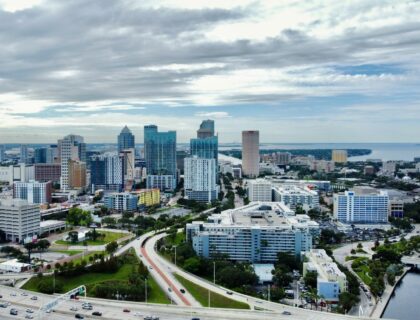

California to Tampa is one of the fastest-growing relocation corridors in the country — and it’s not because of the beaches (though those don’t hurt). It’s the math.
A household earning $150,000 in Los Angeles or San Francisco can gain $20,000–$40,000 in effective purchasing power just by moving to Tampa. No state income tax. Housing that costs half as much. And a metro area that’s grown by over 100,000 people since 2020 — most of them from California, New York, and the Northeast.
But Tampa isn’t California with better weather. The differences are real, and some of them will surprise you. This guide compares the two — cost of living, housing, taxes, weather, lifestyle, and the details that don’t show up in online calculators — so you can make a decision based on actual numbers, not just marketing from either side.

Cost of Living: Tampa vs. California (2026 Numbers)
Let’s put real numbers on it. This comparison uses Tampa vs. Los Angeles and Tampa vs. San Francisco as benchmarks, since those are the two California metros sending the most people to Tampa.
Housing
This is where the gap is largest.
| Metric | Tampa, FL | Los Angeles, CA | San Francisco, CA |
|---|---|---|---|
| Median Home Price (2026) | $380,000 – $420,000 | $850,000 – $950,000 | $1,200,000 – $1,400,000 |
| Median Rent (2BR) | $1,800 – $2,200/mo | $2,800 – $3,500/mo | $3,500 – $4,500/mo |
| Price per Sq Ft | $250 – $300 | $550 – $700 | $800 – $1,100 |
| Property Tax Rate | ~0.89% (Hillsborough Co.) | ~0.76% (LA County) | ~0.74% (SF County) |
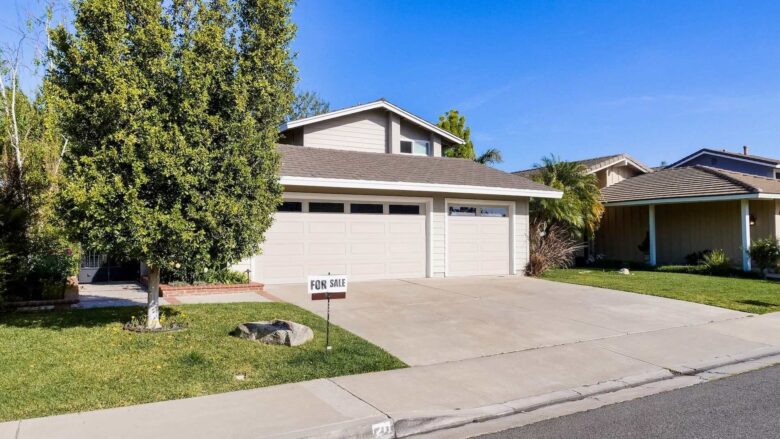
What this means in practice: A 1,800 sq ft, 3-bedroom home with a garage and a yard in a good Tampa neighborhood (South Tampa, Westchase, Riverview) costs $380K–$450K. That same home in a comparable LA neighborhood runs $850K–$1.1M. In the Bay Area, you’re looking at $1.3M+.
Property tax rates in Florida are slightly higher than California’s — but they’re calculated on a much lower home value, so your actual annual bill is significantly less. And if you buy, Florida’s homestead exemption knocks up to $50,000 off your assessed value for tax purposes.

Taxes
This is the second-biggest financial reason people move from California to Tampa.
| Tax Category | Tampa / Florida | California |
|---|---|---|
| State Income Tax | 0% | 1% – 13.3% (progressive) |
| Sales Tax | 7.5% (Hillsborough County) | 7.25% – 10.75% (varies by city) |
| Property Tax | ~0.89% effective | ~0.76% effective |
| Estate Tax | None | None (federal still applies) |
A real example: A household earning $200,000 in California pays approximately $13,000–$17,000 in state income tax (depending on filing status and deductions). In Florida, that number is $0. Over 5 years, that’s $65,000–$85,000 in savings — before you factor in the lower housing cost.

Everyday Expenses
| Category | Tampa | Los Angeles | San Francisco |
|---|---|---|---|
| Groceries | Baseline | +10–15% above Tampa | +15–25% above Tampa |
| Gas (per gallon) | $3.10 – $3.50 | $4.50 – $5.50 | $5.00 – $6.00 |
| Utilities (monthly avg) | $200 – $350 | $150 – $250 | $150 – $250 |
| Auto Insurance (annual) | $2,500 – $3,500 | $2,200 – $3,000 | $2,000 – $2,800 |
| Homeowners Insurance (annual) | $3,500 – $6,000+ | $1,200 – $2,000 | $1,000 – $1,800 |
The catch: Florida utility bills are higher (AC runs 8+ months per year) and homeowners insurance is dramatically more expensive — $3,500–$6,000+/year due to hurricane risk. Flood insurance is separate and often required. This is the hidden cost that surprises most California transplants. Budget for it before you buy.

Weather: Tampa vs. California
California’s weather is its greatest selling point. Tampa’s weather is… more complicated.
| Factor | Tampa | Los Angeles | San Francisco |
|---|---|---|---|
| Average Summer High | 90°F (with 80% humidity) | 84°F (dry) | 68°F (foggy) |
| Average Winter High | 72°F | 68°F | 57°F |
| Annual Rainfall | 52 inches | 15 inches | 23 inches |
| Humidity (Summer) | 70–85% | 30–50% | 60–75% |
| Hurricane Season | June 1 – Nov 30 | N/A | N/A |
| Sunny Days/Year | 246 | 284 | 259 |
What Tampa Weather Actually Feels Like
Summer (June–September): Hot and humid. Not “dry heat” — Tampa summers feel tropical. Daily afternoon thunderstorms roll through like clockwork between 2:00 and 5:00 PM. You’ll learn to plan outdoor activities for the morning. AC is not optional — it’s survival infrastructure, just like in Phoenix.
Fall (October–November): The best time of year in Tampa. Humidity breaks, temperatures drop into the 70s–80s, and the afternoon storms stop. This is when you’ll understand why people move here.
Winter (December–February): Mild. Highs in the 60s–70s. The occasional cold front drops temps into the 40s for a day or two, and Floridians lose their minds. Coming from California, you’ll barely notice.
Spring (March–May): Warm, dry, and pleasant. Humidity starts climbing in May, signaling summer’s arrival.
The honest comparison: If you’re coming from LA, you’re trading near-perfect year-round weather for tropical summers and mild winters. If you’re coming from San Francisco, Tampa’s warmth is a genuine upgrade — but the humidity is a shock. Either way, you’ll spend more time indoors from June through September than you’re used to.
Housing Market: What Your Money Actually Buys
Tampa Housing in 2026
Tampa’s housing market has cooled slightly from the 2021–2023 frenzy, but it’s still appreciating at 3–5% annually. The sweet spot for California transplants is $350K–$550K, which gets you:
- South Tampa / Hyde Park: Walkable, urban, restaurants and nightlife. Older homes and new townhouses. $450K–$700K for a 3BR.
- Westchase: Suburban, family-oriented, top-rated schools. 3BR homes with pools for $400K–$550K.
- Riverview / Brandon: More affordable, newer construction. 3–4BR homes starting at $300K–$400K. Growing fast.
- Seminole Heights: Tampa’s “up-and-coming” neighborhood (for the last decade). Bungalows, craft breweries, walkable strips. $350K–$500K.
- Wesley Chapel / New Tampa: North of the city. Master-planned communities, new builds, family-focused. $350K–$500K.
- St. Petersburg / Gulfport: Across the bay. Arts-heavy, walkable downtown, beach access. A different vibe from Tampa proper. $400K–$600K for a good location.
- Downtown Tampa / Water Street: New condos and high-rises. The urban option. $350K–$700K+ for 1–2BR condos.
The California Comparison
| What $500K Buys You | Tampa | Los Angeles | San Francisco |
|---|---|---|---|
| Home Type | 3BR/2BA house, 1,800 sq ft, pool possible | 1BR condo or small fixer-upper | Nothing (below median condo price) |
| Neighborhood Quality | Good suburban or established urban | Entry-level / transitional | N/A |
| Yard | Yes | Maybe a balcony | No |
| Garage | Likely | Unlikely | No |

Jobs and Economy: Can You Work in Tampa?
Tampa’s Job Market in 2026
Tampa’s economy has diversified significantly. It’s no longer just tourism and retirement. The major employment sectors include:
- Finance and insurance: USAA, JPMorgan Chase, Citigroup, and dozens of fintech startups have significant Tampa operations.
- Healthcare: Tampa General Hospital, BayCare, AdventHealth, and Moffitt Cancer Center are major employers.
- Tech: Tampa’s tech scene is growing — not Bay Area level, but expanding. Defense tech (MacDill AFB proximity), SaaS companies, and cybersecurity firms are establishing offices.
- Remote work: This is the big one. A large percentage of California-to-Tampa movers are remote workers keeping their California salaries while benefiting from Florida’s cost of living. If you’re in this category, the math is strongly in Tampa’s favor.
Salary Comparison
Salaries in Tampa are typically 10–25% lower than California equivalents for the same role. But when you factor in zero state income tax and dramatically lower housing costs, your effective purchasing power increases by 20–40% despite the lower gross salary.
Example: A software engineer earning $180,000 in San Francisco takes home roughly $120,000 after federal and state taxes, then spends $36,000–$48,000/year on rent. Net: ~$72K–$84K for everything else.
The same engineer earning $145,000 in Tampa takes home roughly $108,000 (no state income tax), spends $22,000–$26,000/year on rent. Net: ~$82K–$86K. More take-home with less gross income.

Lifestyle: What Changes When You Leave California for Tampa
What’s Better in Tampa
- Affordability: Everything from housing to dining to entertainment costs less.
- Space: Homes are larger. Yards exist. You can park in your own garage.
- No state income tax: The annual savings are real and significant.
- Waterfront access: Tampa Bay, Clearwater Beach, and the Gulf Coast are minutes away — not hours.
- Pace of life: Slower, more relaxed. Less competitive social energy. Whether that’s a pro or a con depends on you.
What’s Better in California
- Weather (especially LA): Nothing beats Southern California’s year-round climate. Tampa summers are oppressive.
- Food and dining diversity: LA and SF food scenes are world-class. Tampa is improving rapidly but isn’t there yet.
- Cultural infrastructure: Museums, music, theater, film industry — California has decades of advantage.
- Public transit: Tampa’s public transit is essentially non-existent. You need a car for everything. LA’s isn’t great, but it’s expanding. SF’s BART/Muni system is functional.
- Natural landscape variety: California has mountains, desert, coast, forests, and wine country within a few hours. Tampa has flatlands, beaches, and the Everglades.
- Tech ecosystem: If you’re building or joining a startup and need in-person networking, California’s density of talent, capital, and events is unmatched.
What Stays About the Same
- Grocery costs (within 10–15%)
- Cell phone and internet bills
- Streaming and subscription costs
- Amazon delivery times (yes, people ask)

Moving from California to Tampa: What to Know
Shipping Your Belongings
The California-to-Tampa route runs approximately 2,500 miles (from LA) or 2,800 miles (from SF). Transit time is typically 6–10 days for a full household move. At Schmidt Movers, we handle interstate relocations from California to Tampa with direct transit — your belongings stay on our truck, start to finish.
Estimated 2026 moving costs (CA to Tampa):
| Home Size | Estimated Cost | Transit Time |
|---|---|---|
| Studio / 1BR | $3,000 – $5,500 | 5 – 7 Days |
| 2 – 3 BR Home | $5,500 – $9,000 | 7 – 10 Days |
| 4+ BR Home | $9,500 – $15,000+ | 8 – 12 Days |
What to Downsize Before You Ship
California apartments are small. Tampa homes are bigger. But that doesn’t mean you should ship everything. Heavy winter gear, bulky furniture that only fit a specific layout, and anything you haven’t used in a year should go before you load the truck.
Humidity Protection
This is the detail California movers overlook. Florida’s humidity can warp wood furniture, mildew leather, and damage electronics. If you’re shipping high-value items — hardwood furniture, instruments, art, leather — ask about climate-controlled transit. Schmidt Movers offers humidity-protected options for the full CA-to-FL route.
Tampa Relocation FAQ
Is Tampa cheaper than California?
Yes — significantly. Housing is 50–65% cheaper than LA and 65–75% cheaper than San Francisco. Add zero state income tax and lower everyday costs, and your effective purchasing power increases by 20–40%. The main exceptions: homeowners insurance and summer utility bills are higher in Tampa.
What's the biggest hidden cost of moving to Tampa?
Homeowners insurance. Florida’s average is $4,000–$6,000/year — roughly triple the California average. Flood insurance is separate and often required by lenders. Budget for this before you buy a home.
Is Tampa a good place to live for remote workers?
For remote workers earning a California salary, Tampa is one of the best financial moves you can make. You keep your income, pay no state tax, and your housing costs drop by half or more. The coworking and coffee shop scene in South Tampa, Seminole Heights, and St. Petersburg is growing fast.
What are the worst things about living in Tampa?
The summers (hot, humid, daily storms from June–September), the lack of public transit (you need a car for everything), hurricane risk (real, not theoretical — check flood zones before buying), and the insurance costs. These are real trade-offs.
How does Tampa compare to Miami?
Tampa is significantly cheaper, less congested, and more suburban-friendly. Miami has better nightlife, more international culture, and a larger job market in finance and luxury real estate. Most California families choose Tampa over Miami for affordability and quality of life.
Do I need a car in Tampa?
Yes. There is effectively no usable public transit system in the Tampa metro. You will drive everywhere. Factor in car insurance ($2,500–$3,500/year), gas, tolls (SunPass is essential), and maintenance.
When is the best time to move to Tampa?
October through March. You avoid the worst heat, hurricane season ends November 30, and moving rates are lower. If you need to move in summer, plan for climate-controlled transit and early-morning load-ins.